
It’s unsettling to feel a rough edge on your tooth, notice mild sensitivity, or hear your dentist mention a “cavity” and wonder what comes next. Many patients come in expecting one simple fix and are surprised to hear there are a few treatment options. At Lanie Family Dentistry, we take time to explain what we see and why, so you can feel confident moving forward with the right treatment.
A common question we hear is dental filling vs crown. Both are part of restorative dentistry, and both can protect natural teeth. The best choice depends on how much healthy tooth structure is still there, the extent of the damage, and how we can support your long-term oral health with proper care.
Why does dental filling vs crown matter for long-term dental health?
Choosing between a filling and a crown affects how well your natural tooth structure is protected over time. The goal is to prevent further damage, lower the risk of infection, and keep the tooth strong for everyday use. A thoughtful treatment plan supports comfort now and helps you avoid repeat repairs later.
What we look for during your dental exam
Your decision should start with a clear, supportive professional evaluation. During your dental exam, we look for signs of tooth decay, cracks, worn spots, and older restorations that may be breaking down. We may also use digital X-rays to check areas that are hard to see directly, since tooth decay can hide between teeth or under old work.
We also talk with you about what you’ve been feeling. Sensitivity to cold, discomfort with chewing, or food catching in a spot can help us understand whether we’re dealing with a small issue or deeper tooth damage. Your comfort matters, and you will always know what we recommend and what to expect at your next dental visit.
When a tooth filling is usually the best option
A tooth filling is often recommended when the cavity is more limited and there is enough healthy tooth left to support it. In these cases, dental fillings can restore the part of the tooth affected by decay while keeping as much of the natural tooth as possible.
At Lanie Family Dentistry, many patients choose tooth-colored fillings made from composite resin. This filling material is designed to blend in for a more natural appearance, which is especially helpful for front teeth. Some patients ask about amalgam fillings (the older silver-colored type). We can explain the types of dental fillings and help you understand which dental filling material is appropriate for your needs and goals.
A filling may be a good fit when:
- The size of the cavity is small to moderate
- The tooth has not lost a large portion of the tooth
- You have early or moderate cavity fillings needs without major cracking
- The tooth still has solid structural support around the damaged area
What happens during a dental filling procedure
If you need a filling, we focus on keeping the experience smooth and comfortable. We typically numb the area with local anesthesia, then gently remove the decayed portion of the tooth. After the tooth is cleaned and prepared, we place and shape the composite material, then harden it with a curing light so it bonds securely.
You may feel some tenderness afterward, and many patients do well with counter pain relievers if needed. We will also review biting and chewing before you leave, because a filling should feel natural when you close your teeth together. Good home habits matter here, too, since a filling repairs a damaged area but does not prevent new decay from forming elsewhere.
When a dental crown becomes the safer choice
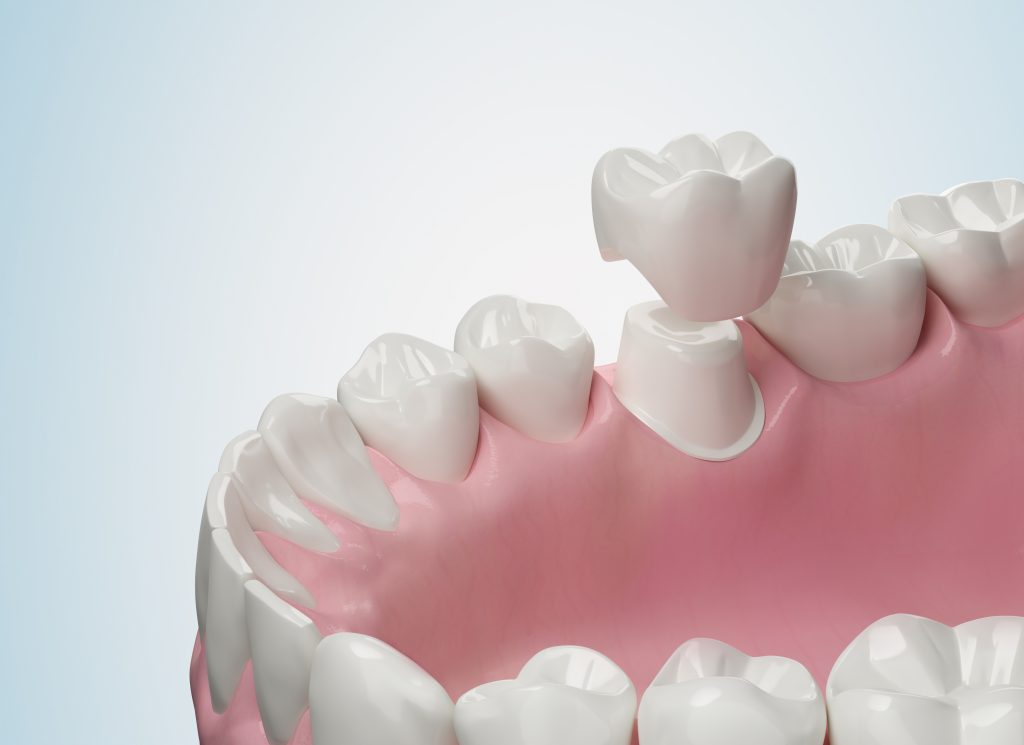
A dental crown works like a protective cover over the tooth. Instead of filling in one spot, a crown provides full coverage over the visible portion of the tooth. We often recommend crowns when the tooth needs extra strength because too much structure has been lost or the tooth is at risk of breaking.
A crown may be the best option when:
- There is a large cavity and a filling would not have enough tooth to hold onto
- The tooth has a crack that threatens long-term stability
- A tooth has significant wear or damage and needs stronger protection
- The tooth has had root canal therapy and needs reinforcement afterward
Crowns are designed to look like the top of a natural tooth. At Lanie Family Dentistry, our crowns are made from porcelain and shaded to blend with your surrounding natural teeth, so your smile stays looking like you.
The dental crown process: what to expect
The dental crown process typically takes more than one appointment. At your first visit, we prepare the tooth so it can properly receive the crown, then take an impression so the dental lab can create a custom restoration that fits your bite and matches your smile.
While your crown is being made, you will wear a temporary crown. This protects the tooth and helps you function normally until your next appointment. At your return visit, we place and bond the permanent crown. We check your bite, your comfort, and the fit, so it feels secure and natural.
Where do inlays and onlays fit in?
Sometimes the best solution falls between a filling and a crown. Inlays & Onlays can be a great middle-ground when a tooth needs more support than a standard filling, but still does not require a full crown.
You can think of them as a custom repair that covers a larger area of the biting surface or the sides of the tooth. They can help protect remaining tooth structure and restore strength, especially when the damage is wider than a small filling can reliably handle. If we think an inlay or onlay is the most appropriate treatment, we will walk you through why and what it would look like for your tooth.
How the location of the tooth changes the recommendation
The location of the tooth matters because different teeth handle different forces. Molars do most of the heavy chewing, so they often need more reinforcement when they have a big cavity or crack. Front teeth may place more focus on appearance, but they can also chip and fracture depending on your bite.
We also consider whether the tooth’s damage is near the gumline, between teeth, or on a chewing surface. These details affect durability and how likely a restoration is to last with normal use. A clear plan protects the tooth today and supports long-term dental health.
Cost, insurance, and making an informed decision
We understand that finances are part of real life, and dental decisions can feel stressful when you are balancing family budgets. Our team will help you understand your estimated costs and how dental insurance plans may apply, so there are fewer surprises. Most importantly, we make sure you have the information you need to make an informed decision that fits your goals.
When choosing between a filling, crown, or inlay/onlay, it can help to ask:
- How much healthy tooth is left after removing decay?
- Will this restoration protect the tooth from breaking?
- What is the risk of needing additional treatment later?
- How can I care for it at home to prevent future problems?
You deserve expert advice that feels clear and pressure-free.
How to protect your restoration with good oral hygiene
No matter which route you choose, your daily habits help your restoration last. Good oral hygiene supports the tooth underneath your restoration and helps prevent new decay around the margins where the restoration meets the tooth.
We recommend brushing twice a day for two minutes, flossing daily, and using fluoride toothpaste. Keeping up with regular dental exams also helps us catch small concerns early, before they turn into bigger repairs or even tooth loss. Prevention saves time, money, and discomfort, and it keeps your smile strong for the long run.
Ready to find out what your tooth needs?
If you have sensitivity, a chipped area, or you suspect a cavity, we’re here to help you sort through the options with clarity and compassion. At Lanie Family Dentistry in Bargersville, we will evaluate your tooth, explain whether a filling, crown, or inlay/onlay fits best, and guide you step by step.
Contact our dental office to schedule your next appointment. We’d love to help you feel comfortable, informed, and confident in your dental care.